Home / Blog / Regional Pricing Case Studies
Regional Pricing Case Studies: SaaS, Games, and Mobile Apps
Published: March 30, 2026 | Author: | Reading Time: 9 min
Regional pricing works best when it matches product type, buyer intent, and purchasing power. Looking at examples across SaaS, games, and mobile apps helps clarify what good localization actually looks like and why affordability does not have to mean weak monetization.
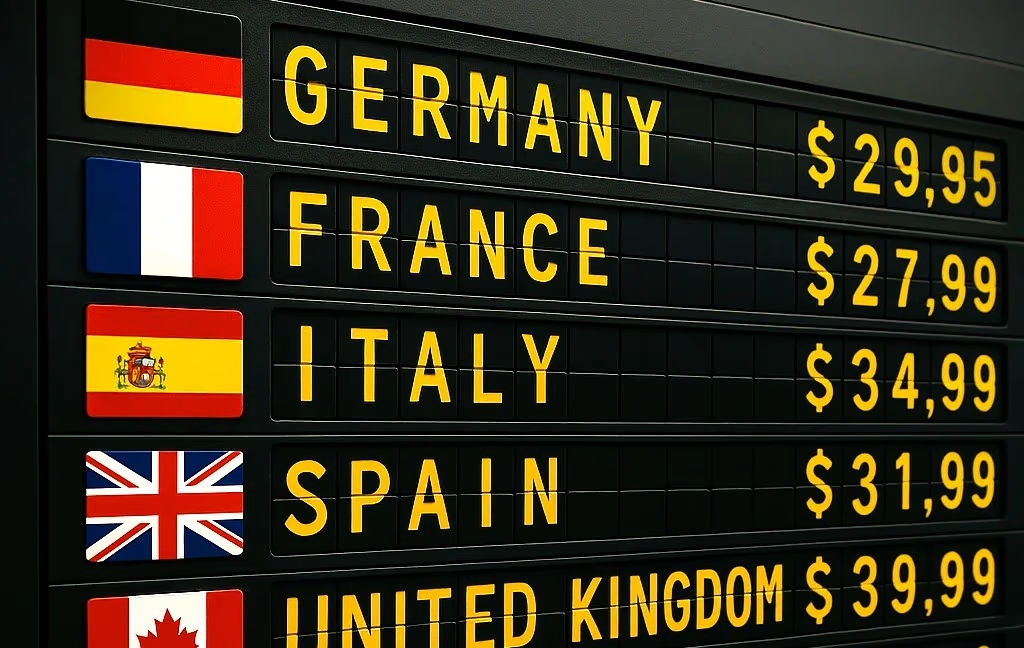
Case Study 1: B2B SaaS and Tiered Affordability
A SaaS company selling collaboration software usually starts with a high-value base market such as the United States, Canada, or Western Europe. If it expands with flat global pricing, its mid-market plan may be acceptable to procurement-heavy buyers but out of reach for startups in Latin America, South Asia, or Eastern Europe.
A better model is to keep packaging consistent while adjusting the price anchor by region. The product remains premium, but the monthly cost becomes more proportional to local wages and business budgets. This often improves trial-to-paid conversion, reduces discount negotiations, and keeps renewal quality strong.
Case Study 2: Premium PC Games and Volume Expansion
PC game publishers on platforms like Steam typically see the clearest case for regional pricing because price elasticity is visible very quickly. A game that is affordable in North America may still feel inaccessible in countries where local purchasing power is significantly lower.
Localized pricing usually lowers the entry barrier, increases wishlists converting to purchases, and reduces the incentive to use gray-market workarounds. Revenue per sale is lower in those regions, but total revenue often becomes healthier because the addressable audience actually starts buying.
For a practical platform guide, compare this article with the Steam regional pricing guide.
Case Study 3: Mobile Apps with Subscription Revenue
Subscription apps on mobile storefronts face a different challenge. The goal is not only to win the first payment but to retain subscribers. Overpricing in emerging markets leads to poor activation and weak renewal cohorts. Underpricing everywhere can weaken LTV in core markets.
The strongest operators often localize entry plans, annual discounts, and promotional pricing while protecting value perception with careful rounding and packaging. They also watch renewal performance by region instead of only focusing on initial installs.
If your acquisition flow depends on app stores, pair this with the Google Play pricing strategy guide.
Shared Patterns Across Successful Examples
- They choose a stable base price and localize from that anchor rather than improvising market by market.
- They use affordability signals such as PPP, competitive context, and payment behavior together.
- They review volatile currencies regularly instead of setting prices once and forgetting them.
- They connect pricing strategy to retention, piracy reduction, and brand trust, not just launch-day conversion.
What These Case Studies Mean for Your Website or Product
If you sell software, subscriptions, or digital goods globally, the question is rarely whether you should localize pricing. The real question is how much to adjust, which regions deserve bespoke attention first, and how to keep pricing logic explainable over time.
That is exactly where a pricing calculator and content hub work well together: educational pages help visitors understand the model, while utility pages help them act on it.
Continue the Topic Cluster
Understand PPP | Review pros and cons | Why regional pricing matters | Use the calculator
About The Author