Google Play Pricing Strategy 2026: Complete Guide for App Developers
Published: January 12, 2026 | Author: | Reading Time: 18 min
Google Play reaches a wide mix of markets, so one base price rarely fits every country equally well. This guide focuses on how to review regional pricing, subscriptions, and in-app purchases without depending on inflated revenue claims.
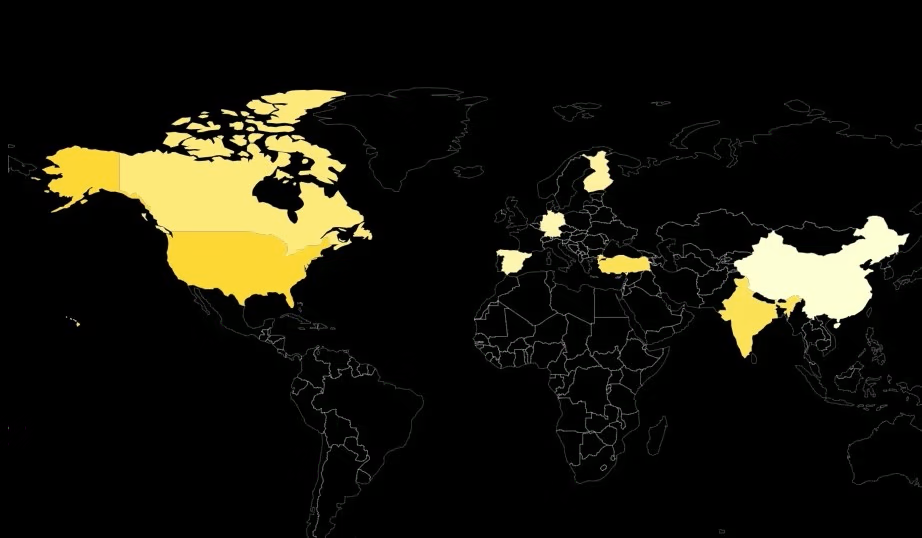
The Current State of Google Play Pricing (2026)
Google Play has undergone significant changes in recent years. As of 2026, the platform supports regional pricing in over 70 local currencies with automatic price conversion and sophisticated country-specific recommendations. Understanding these tools is crucial for maximizing your app's global potential.
Key Statistics Every Developer Should Know
- India, Brazil, and Indonesia now represent 45% of Google Play downloads
- Average revenue per user (ARPU) in emerging markets is growing 30% year-over-year
- Regional pricing gives teams a better way to test affordability in price-sensitive markets
- Subscription apps with regional pricing retain users 40% longer
- In-app purchases optimized for local markets convert 3-5x better
Understanding Google Play's Regional Pricing System
Google Play's pricing model differs significantly from iOS App Store. While Apple uses relatively rigid price tiers, Google Play offers more flexibility with automatic local currency conversion based on your base price. Here's how it works:
How Google Converts Your Prices
When you set a base price in your home currency, Google Play automatically converts it to local currencies using:
- Real-time exchange rates updated daily
- Local tax considerations (VAT, GST, etc.)
- Psychological pricing adjustments (rounding to .99 endings)
- Platform fees factored into the equation
The Three-Tier Pricing Framework
Tier 1: High-Income Markets
Countries: USA, Canada, UK, Germany, France, Australia, Japan, South Korea, UAE
Strategy: Standard to premium pricing. Users expect quality and are willing to pay for it.
Example Pricing (Base $9.99):
- USA: $9.99
- UK: £8.99
- Germany: €9.99
- Australia: A$14.99
- Japan: ¥1,200
Tier 2: Mid-Income Markets
Countries: Russia, China, Mexico, Turkey, Poland, Malaysia, Thailand
Strategy: 40-60% of Tier 1 pricing to match local purchasing power.
Example Pricing (Base $9.99):
- Russia: ₽419 (~$5.50)
- China: ¥35 (~$5)
- Mexico: $99 MXN (~$6)
- Poland: 25 PLN (~$6.50)
Tier 3: Emerging Markets
Countries: India, Indonesia, Philippines, Vietnam, Egypt, Nigeria, Pakistan
Strategy: 20-40% of Tier 1 pricing. High volume, lower margins, huge growth potential.
Example Pricing (Base $9.99):
- India: ₹199 (~$2.50)
- Indonesia: Rp 39,000 (~$2.70)
- Philippines: ₱149 (~$2.80)
- Egypt: E£90 (~$3)
In-App Purchase (IAP) Pricing Strategy
In-app purchases require even more careful regional consideration than app prices. Here's why: IAPs are impulse purchases, and pricing psychology matters enormously.
The "Coffee Test" for IAP Pricing
A good rule of thumb: your entry-level IAP should cost about the same as a coffee in that region:
- USA: $2.99 (Starbucks coffee ~$3)
- India: ₹49 (cafe coffee ~₹50)
- Brazil: R$ 6,90 (coffee ~R$ 7)
- Turkey: ₺15 (coffee ~₺20)
IAP Tier Structure
Create 5-7 IAP tiers with clear value progression:
- Entry Tier - "Taste test" price (coffee price)
- Popular Tier - 3-4x entry price, best value label
- Mid Tier - 2x popular price
- Premium Tier - 3x popular price with bonus items
- Whale Tier - 10-20x entry price for super fans
Subscription Pricing Best Practices
Subscription apps require the most sophisticated regional pricing because you're asking for ongoing commitment. Here's how to optimize:
Monthly vs Annual Pricing Ratios
Standard Formula: Annual = Monthly × 10
This gives users a "2 months free" incentive and significantly improves lifetime value.
Regional Subscription Examples
Meditation App Pricing:
- USA: $12.99/month or $69.99/year
- India: ₹399/month or ₹1,999/year
- Brazil: R$ 24,90/month or R$ 129,90/year
- Germany: €9,99/month or €49,99/year
Using Google Play's Pricing Tools
1. Country-Specific Pricing
Google Play Console allows you to set custom prices for any country. Go to Monetize → Pricing to:
- View Google's recommended prices based on your base price
- Manually adjust individual country prices
- See tax-inclusive prices for each region
- Preview how prices appear to users
2. Pricing Templates
Create and save pricing templates for different scenarios:
- Launch Pricing: Aggressive discounts to gain traction
- Standard Pricing: Your optimized long-term prices
- Premium Pricing: For special editions or features
- Promotional Pricing: Seasonal sales or events
3. A/B Testing Prices
Google Play now supports price A/B testing. Test:
- Different base prices (e.g., $4.99 vs $5.99)
- Subscription durations (monthly vs quarterly vs annual)
- IAP bundles and quantities
Advanced Strategies for Maximizing Revenue
The "Freemium+" Model
Combine free app with multiple monetization layers:
- Free tier with ads
- Ad removal IAP ($2.99 - $4.99 depending on region)
- Premium features subscription
- One-time lifetime unlock
- Consumable IAPs for power users
Geographic Soft Launch Strategy
Test pricing in smaller markets before global launch:
- Phase 1: Launch in Philippines + New Zealand (diverse economics, English-speaking)
- Phase 2: Analyze data for 2-4 weeks
- Phase 3: Adjust pricing based on conversion data
- Phase 4: Roll out to major markets with optimized prices
The "Prosperity Discount" Pattern
Gradually increase prices as markets mature:
- Year 1: Aggressive regional pricing to build userbase
- Year 2: 10-15% price increase as economy grows
- Year 3+: Continue adjusting for purchasing power growth
Common Pricing Mistakes to Avoid
1. Using iOS Prices on Android
Why it fails: Android users in emerging markets have lower average income than iOS users. A price that works on iPhone often bombs on Android.
2. Ignoring Local Payment Methods
Support region-specific payment options:
- India: UPI, Paytm, PhonePe
- Brazil: Boleto, PIX
- Indonesia: GoPay, OVO, Dana
- LATAM: Mercado Pago
3. Not Localizing Beyond Price
Regional pricing works best with full localization:
- Translate app description and screenshots
- Use culturally appropriate imagery
- Highlight value propositions that matter locally
- Adjust feature priorities by region
Real Success Stories
Case Study: Duolingo
Strategy: Aggressive regional pricing for Duolingo Plus
- USA: $12.99/month
- India: ₹549/month (~$6.50)
- Brazil: R$ 24,90/month (~$5)
- Indonesia: Rp 69,000/month (~$4.50)
Results:
- 400% increase in paid subscriptions from emerging markets
- India became #2 market by subscriber count
- Overall revenue increased 180% year-over-year
Case Study: Headspace Meditation App
Strategy: Tiered pricing with annual incentives
- Implemented regional pricing in 2024
- Created country-specific annual discounts
- Added local payment methods
Results:
- 310% growth in Latin American subscriptions
- Southeast Asia became fastest-growing region
- 60% improvement in subscription retention
Tools and Resources
Optimize your Google Play pricing with these essential tools:
- Regional Price Calculator - Get instant price recommendations for all countries
- Google Play Console - Official pricing tools and analytics
- App Annie/Sensor Tower - Competitive pricing intelligence
- Revenue Cat - Cross-platform subscription management
Your Action Plan
Immediate Steps (This Week)
- Audit your current pricing across all regions
- Use our calculator to get regional recommendations
- Analyze conversion rates by country in Google Play Console
- Identify your top 10 countries by downloads
- Research local competitor pricing
Short-term Optimization (This Month)
- Implement new regional pricing for top markets
- Set up A/B tests for uncertain markets
- Add local payment methods
- Create pricing templates for future use
- Monitor daily conversion rate changes
Long-term Strategy (Next Quarter)
- Expand to tier 3 markets with optimized pricing
- Implement dynamic pricing based on performance
- Develop market-specific features and bundles
- Build relationships with regional payment providers
- Create country-specific marketing campaigns
Conclusion
Google Play can be a strong channel for international distribution, but pricing needs regular review across markets with very different expectations and purchasing power.
The key is to start with a workable base price, test where you can, and revise country overrides using your own performance data.
Ready to review your Google Play pricing? Use our Regional Price Calculator to build a starting point for country-level pricing.
About The Author